
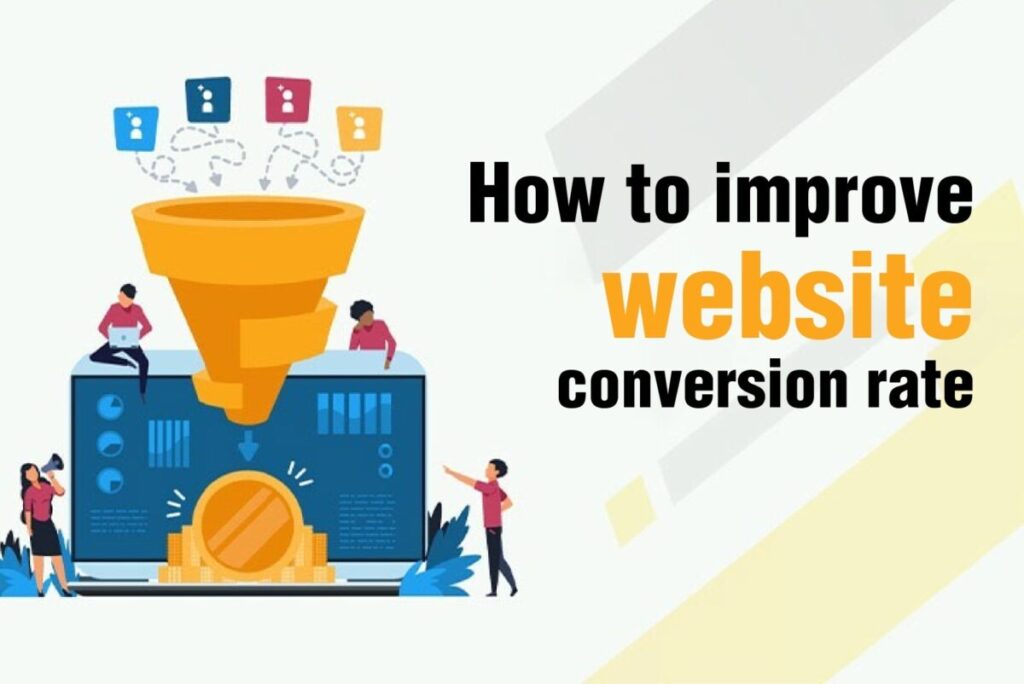
High Traffic, Low Sales? How to Improve Website Conversion Rate Through Better UX
Are your website analytics telling you a different story than what you expected? As a marketing manager, checking reports should be exciting. You run campaigns, invest in SEO, and visitors pour in. The traffic is great, but actual revenue is lackluster. This common dilemma points to a critical issue: getting people to your site is only half the battle.
When visitors arrive but leave without taking action, it becomes clear that acquiring traffic is not enough. You must also know how to improve website conversion rate. The real pain point often comes down to understanding user behavior. Many websites simply miss the mark because they are built based on what the company wants to say, rather than being designed with the end-user in mind.
The Common Dilemma: Great Traffic but Lackluster Conversions
Marketing teams often pour their budgets into digital advertising, social media outreach, and search engine optimization. These efforts successfully generate clicks. However, clicks do not pay the bills. If you want to improve website conversion rate, you need to align your site design with the expectations and needs of your visitors. High bounce rates and abandoned shopping carts are clear indicators that your user flow has hidden friction.
Why High Traffic Does Not Always Equal Revenue
Traffic metrics only measure the volume of attention your brand receives. They do not measure the quality of the interaction. A site might rank well for a specific keyword and draw massive traffic, but if the landing page does not immediately answer the user’s intent, they will leave. To genuinely improve website conversion rate, you must bridge the gap between user intent and user experience. This means providing clear navigation, fast load times, and compelling calls to action that guide the visitor naturally toward a purchase or a sign-up.
Why Understanding User Behavior is the Key to Success
You cannot effectively fix a problem until you know exactly where it is happening. Analytics platforms like Google Analytics provide quantitative data, telling you how many people visited and what pages they viewed. But they rarely tell you why a visitor left. To improve website conversion rate, you need qualitative data. You need to uncover the actual user pathways that lead to drop-offs.
Every visitor goes on a journey when they land on your site. They might start on a blog post, click to a service page, check the pricing, and then head to the contact form. If they abandon the site right at the contact form, you have found a point of friction. Perhaps the form asks for too much personal information, or maybe the submit button is hard to find on mobile devices. By analyzing these specific behavioral patterns, any business looking to improve website conversion rate can make targeted, data-backed adjustments rather than guessing what might work.
Finding and Eliminating Friction Points
Friction is anything that prevents a user from achieving their goal on your site. When you identify and remove these obstacles, the user experience becomes seamless. Common friction points that hurt your UX include:
- Slow-loading images and heavy scripts that delay the user journey.
- Confusing menu structures that hide important service or product pages.
- Broken links leading to frustrating error screens.
- Overly complicated checkout processes requiring too much unnecessary information.
Removing these barriers builds trust, keeps visitors on the site longer, and ultimately drives them to convert.
Proven Strategies for Conversion Rate Optimization
At WEAMSE, we have helped numerous clients analyze their data to transform their underperforming websites into lead-generating assets. Through this hands-on experience, we have found that the most reliable ways to boost your sales usually involve a mix of direct testing and behavioral analysis. Here are the core strategies that yield the best results.
1. Leverage Heat Mapping Tools
Heat mapping tools provide a visual representation of where users are clicking, scrolling, and hovering on your web pages. They are essential when you want to improve website conversion rate because they show you exactly what draws the user’s attention. If your primary call-to-action button is located at the bottom of the page, but a scroll map shows that 80 percent of users never scroll past the fold, you have instantly found a massive conversion block. Moving that button higher up can dramatically increase your overall leads.
2. Implement Simple A/B Testing
Never rely on assumptions when designing a landing page. A/B testing allows you to create two different versions of a page to see which one performs better. You might test two different headlines, varying button colors, or completely different page layouts. By employing simple A/B testing, we have helped clients identify precisely what messaging resonates best with their audience. If your primary goal is to improve website conversion rate, start by testing small elements like the phrasing of your call-to-action before moving on to larger design overhauls.
3. Optimize User Flow and Navigation
Your website navigation should point users exactly where they need to go. If a visitor clicks more than three times to find information, they usually bounce. Simplify your menus, utilize internal linking to guide readers to relevant services, and ensure your mobile layout is incredibly intuitive.
The ROI of UX: How Design Tweaks Yield Massive Returns
Many business owners hesitate to invest in web design overhauls because they view it as an aesthetic expense rather than a strategic investment. However, studies show that improving web UX can boost conversion rates by up to 400 percent. That is a staggering return on investment when you look at the raw data.
A better user experience leads to increased satisfaction and longer visits. Trust is the foundation of any transaction. By focusing heavily on user-centric design, you do more than just improve website conversion rate; you build brand loyalty that brings customers back.
How WEAMSE Can Help Optimize Your Web Application
Understanding the theory behind conversion rate optimization is one thing, but executing a flawless strategy requires technical expertise and analytical insight. At WEAMSE, we specialize in bridging the gap between high traffic and high revenue. We do not just build websites; we engineer digital experiences designed to convert seamlessly.
We analyze your data to map out user pathways causing drop-offs. By deploying advanced heat mapping tools, setting up rigorous A/B tests, and refining areas of friction, we improve user flow dramatically. The results speak for themselves: increased satisfaction, longer visits, and highly optimized conversion funnels.
Are you curious about what your site currently says about your business? If you are tired of lackluster sales and want to partner with an expert to improve website conversion rate effectively, let us have a chat. We can turn your digital presence into the powerful growth engine it was meant to be.
Frequently Asked Questions (FAQ)
What is the fastest way to improve website conversion rate?
The fastest way to boost these metrics is to simplify your call-to-action and streamline your user navigation. Removing unnecessary form fields, fixing broken links, and ensuring your site loads quickly on mobile devices can provide immediate boosts to your conversion numbers. Utilizing basic A/B testing on your headlines and buttons is also a highly effective quick win.
How does user experience (UX) affect conversion rates?
User experience directly impacts how easily a visitor can find information and complete a desired action on your site. Studies indicate that a well-designed user interface can increase conversions by up to 400 percent. When a website is intuitive, fast, and user-friendly, visitors encounter less friction, leading to higher trust and more completed transactions.
What tools can help identify why website visitors are dropping off?
To understand why visitors are leaving your site without buying or signing up, you should use a combination of analytics and behavioral tools. Google Analytics helps track bounce rates and exit pages, while heat mapping software provides visual data on how users scroll and click. Combining these resources gives you a clear picture of user friction points so you can make data-driven improvements.
Why is A/B testing important for web design?
A/B testing is crucial because it removes guesswork from web design and development. By presenting two variations of a page to different segments of your audience, you can see exactly which design, copy, or layout generates more leads. Continuous testing ensures that your site is constantly optimized based on real user behavior rather than subjective opinions.